Rent online in minutes
Contact Us
We will get back to you as soon as possible.
Please try again later.
Check out all 4,000+ of our locations on a map by clicking "Find Storage" in the menu!

4.8
Smart Storage
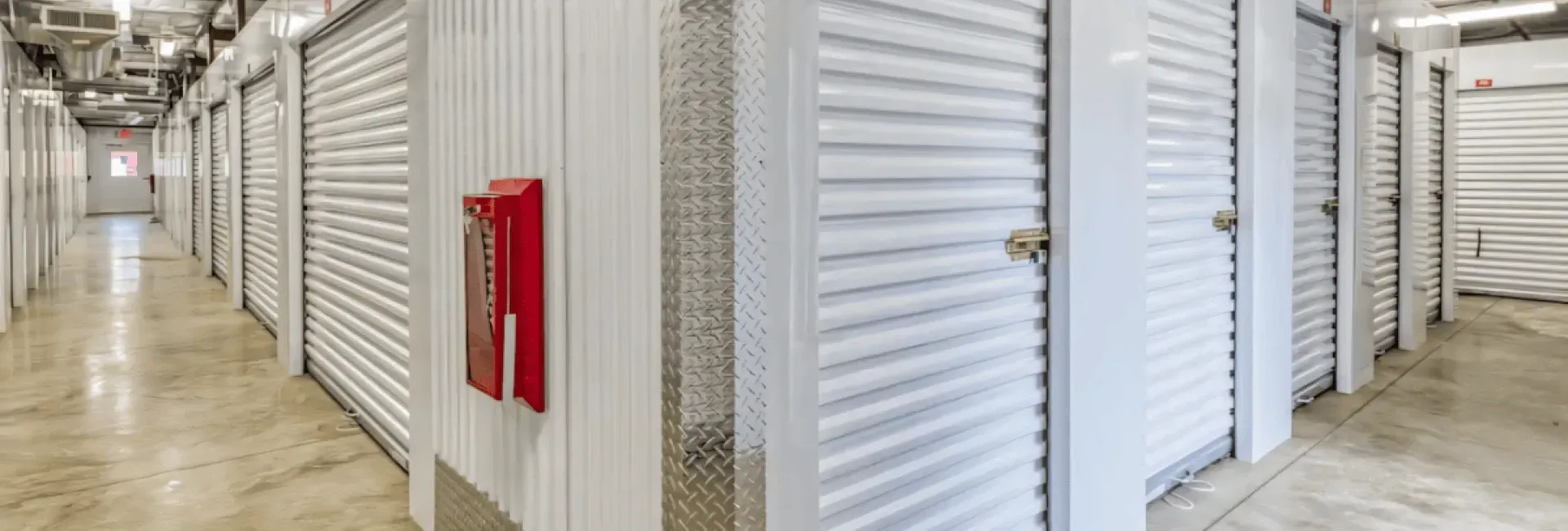
Smart Storage: Unit-Level Monitoring That Goes Beyond Standard Security
Every reputable storage facility offers some level of security - gated entry, access codes, and camera systems that monitor the property. That infrastructure protects the facility as a whole, but it doesn't tell you what's happening inside your specific unit. You find out about a problem when you visit and notice something is off, which could be weeks or months after the fact.
Smart storage changes that equation by putting monitoring technology inside the individual unit rather than just around the property. Sensors detect motion and environmental changes inside the space, smart locks track exactly when the door opens and closes, and alerts go directly to your phone in real time. Instead of relying solely on facility-wide systems, you get unit-specific awareness that works whether you're across town or across the country.
It's worth understanding that smart storage isn't a different physical storage format. It's a technology layer added to existing unit types. A drive-up unit with smart sensors is still a drive-up unit. An indoor unit with a smart lock is still an indoor unit. The technology enhances what the unit can tell you about itself, but it doesn't change how the unit is built, accessed, or climate-managed. That distinction matters because it means smart features can appear alongside any storage format - the question is whether the facility you're considering has adopted the technology.
Not every facility offers smart storage, and the specific features vary by location and provider. Some facilities offer motion alerts only. Others include smart locks with digital access logs. A smaller number include environmental sensors that track temperature and humidity inside the unit. The technology is still expanding across the industry, but facilities that have adopted it are giving renters a level of transparency and control that didn't exist a few years ago.
The Storage Advantage lets you filter for facilities with smart storage features, so you can see which
locations near you offer unit-level monitoring and compare what's included before renting.
What Smart Storage Technology Actually Does
"Smart storage" is a broad term, and what it includes depends on the facility. Here's what each type of technology does and why it matters for the person renting the unit.
Motion Detection and Activity Alerts
Motion sensors mounted inside the storage unit detect movement and send an alert to your phone via text message or a dedicated app. The alert is immediate - you know within seconds that something is happening inside your unit, regardless of where you are. This is fundamentally different from facility security cameras, which record footage that someone has to review after the fact. Motion alerts give you real-time awareness so you can respond immediately, whether that means calling the facility, contacting authorities, or simply confirming that it was your own scheduled visit. The value here is straightforward: if you're not the one opening your unit, you want to know about it the moment it happens rather than discovering it days or weeks later. For anyone storing items that are valuable, difficult to replace, or important to a business operation, motion detection closes the gap between "something happened" and "you know about it" from potentially weeks to seconds.
Smart Locks and Keyless Access
Traditional storage units use a physical padlock or disc lock that you bring yourself. Smart locks replace or supplement that with Bluetooth-enabled or app-controlled locking mechanisms. The practical advantages go beyond not needing to carry a key. Smart locks generate a digital access log - a timestamped record of every time the lock was opened and closed. You can see exactly when the unit was accessed and, depending on the system, by whom. This is especially useful for business storage situations where multiple employees need access to the same unit. Grant or revoke access remotely through the app without having to meet someone at the facility to hand off a key. If an employee leaves the company, cut their access immediately instead of worrying about who has a copy of the lock key. The access log also provides an audit trail that's useful for inventory management, insurance documentation, and simply knowing the activity history of your unit.
Environmental Monitoring
Some smart storage systems include sensors that track temperature and humidity conditions inside the unit in real time. If conditions drift outside a safe range, the system sends an alert to your phone. This feature is particularly relevant for items that are sensitive to environmental changes - wood furniture, electronics, documents, artwork, and specialty business inventory like pharmaceuticals or cosmetics. Environmental monitoring doesn't replace
climate-controlled storage - it doesn't actively regulate the environment. What it does is verify that the climate control system is doing its job and notify you if something goes wrong. Think of it as a check on the facility's environmental systems. If the HVAC in a climate-controlled building fails on a Friday night, renters with environmental monitoring find out Saturday morning instead of whenever they happen to visit next. That early warning can be the difference between catching a problem before damage occurs and discovering damage after it's already done.
When Smart Storage Is Worth the Premium
Smart storage typically costs more than a comparable unit without the technology. Whether that premium makes sense depends on what you're storing and how much visibility you want into what's happening with it.
High-Value or Irreplaceable Items
Artwork, antique furniture, collections, musical instruments, family heirlooms, and electronics that are expensive or impossible to replace justify the additional cost of smart monitoring. The value of what's inside the unit is high enough that real-time awareness isn't a luxury - it's a practical safeguard. Motion alerts ensure you know immediately if someone accesses your unit unexpectedly. Environmental sensors protect against the kind of slow, invisible damage that ruins sensitive items before anyone notices. For household storage involving items with significant monetary or sentimental value, smart features provide a level of protection that standard facility security can't match on its own.
Business Inventory and Equipment
Businesses storing tools, equipment, product inventory, or client materials have different security needs than someone storing seasonal decorations. Knowing exactly when the unit was accessed, and by whom, matters for accountability and inventory control. Smart locks with access logs give business owners visibility into unit activity without having to be present. If multiple team members rotate through the unit during the week, you can see the full access history from your phone. For businesses that store expensive equipment or inventory that directly affects revenue, the cost of smart storage is minor compared to the cost of a theft or loss that goes undetected.
Long-Term Storage With Infrequent Visits
If you're storing belongings for six months, a year, or longer and only visit the unit occasionally, there's a long window between each visit where you have no idea what's happening inside. Smart monitoring fills that gap with continuous awareness. Motion alerts catch unauthorized access between visits. Environmental sensors confirm conditions are staying stable month after month. Instead of driving to the facility periodically just to check that everything looks fine, you get passive confirmation through the app and immediate alerts if anything changes. For long-term renters, smart storage turns "I should probably go check on my stuff" into "I already know it's fine."
Smart Storage Questions, Answered
Is smart storage the same as climate-controlled storage?
No. Smart storage refers to monitoring technology (motion sensors, smart locks, environmental sensors) added to a storage unit. Climate-controlled storage actively regulates temperature and humidity inside the unit. They serve different purposes, though they complement each other well. A climate-controlled unit with smart environmental monitoring gives you both active regulation and real-time verification that it's working correctly.
What happens when a motion alert goes off?
You receive a notification on your phone via text or app. From there, you decide how to respond. If you're expecting someone to access the unit, no action is needed. If the activity is unexpected, you can contact the facility or local authorities. The alert itself doesn't trigger any automatic response like a siren or lockdown - it simply ensures you're aware of the activity in real time.
Can I share smart lock access with someone else?
Most smart lock systems allow the primary renter to grant access to additional users through the app. Each authorized user receives their own digital credentials, and the access log records each person's entry separately. You can revoke access at any time without needing to change a physical lock or meet anyone at the facility.
Does smart storage cost more than a standard unit?
Yes, smart storage typically carries a monthly premium over a comparable unit without smart features. The exact cost varies by facility and which technologies are included. The premium generally reflects the hardware, monitoring platform, and connectivity costs associated with the technology. Whether it's worth it depends on the value of what you're storing and how much real-time awareness matters to you.
Is smart storage available at every facility?
No. Smart storage technology is still expanding across the self storage industry. Availability varies significantly by facility and region. Some facilities offer smart features across all their units, while others offer it as an optional upgrade on select units. Filter for smart storage on The Storage Advantage to see which facilities near you currently offer it.
Do I need smart storage if the facility already has cameras and gated access?
Facility-level security (cameras, gates, access codes) monitors the property as a whole. Smart storage monitors your individual unit. They work on different scales. Cameras may capture someone walking through the facility, but they don't tell you what's happening inside your locked unit. Motion sensors inside the unit do. If standard facility security gives you enough confidence for what you're storing, smart features may not be necessary. If you're storing high-value items or want real-time unit-specific alerts, smart storage adds a layer that property-wide systems don't provide.
Find Smart Storage Near You
Smart storage gives you eyes on your unit when you can't be there in person. Search smart storage options on The Storage Advantage to find facilities near you with unit-level monitoring, and compare what's available before you rent.