How to Store Baby Gear You Plan to Use Again

Babies grow quickly, and before you know it, the bassinet, stroller, high chair, and tiny clothes are no longer needed. While it may be tempting to donate or sell everything, many families keep baby gear for a future child or pass it along to relatives. The challenge is finding a way to preserve these items without letting them take over your home.
Self-storage is one of the easiest ways to keep bulky baby gear protected while freeing up valuable living space. Whether you're storing items for a year or several years, proper preparation helps ensure they're clean, safe, and ready when you need them again.
Why Proper Storage Matters
Baby gear is an investment. Strollers, cribs, swings, carriers, and feeding equipment often cost hundreds or even thousands of dollars to replace. Storing them correctly can extend their lifespan and reduce unnecessary waste.
Research published in the Journal of Environmental Psychology has also found that cluttered living environments can increase stress and reduce people's ability to focus. Moving infrequently used items into organized storage units can create a more functional and relaxing home while keeping important belongings accessible for the future.
Start by Sorting Everything
Before packing anything away, divide your baby items into categories.
| Keep | Donate or Sell | Dispose | Email Address |
|---|---|---|---|
| Quality gear you'll use again | Items your child outgrew but won't reuse | Broken, recalled, or damaged products | anne.evans@mail.com |
| Seasonal clothing | Duplicate toys | Worn bottles, nipples, pacifiers | bill.fernandez@mail.com |
| Nursery furniture | Extra blankets | Unsafe or expired equipment | candice.gates@mail.com |
This prevents you from paying to store items that no longer serve a purpose.
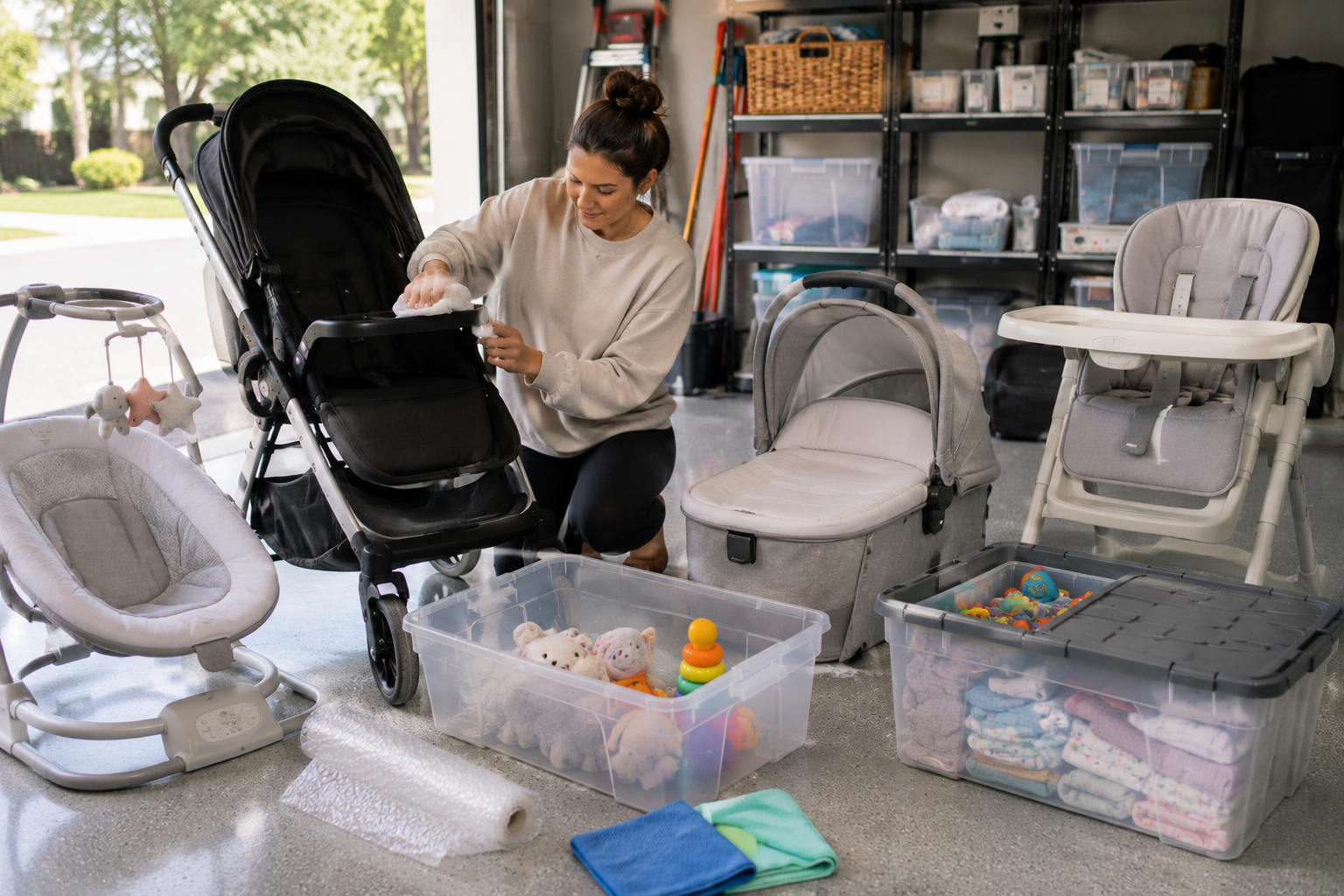
Clean Every Item Thoroughly
Never place baby gear into storage spaces without cleaning it first.
Food residue, milk stains, dirt, and moisture can attract pests or encourage mold growth over time.
Take time to:
- Wash all removable fabrics according to manufacturer instructions.
- Wipe plastic and metal surfaces with gentle soap and water.
- Vacuum strollers and car seats.
- Dry every item completely before packing.
- Remove batteries from electronic toys and swings.
The Centers for Disease Control and Prevention (CDC) notes that moisture encourages mold growth, making complete drying especially important before long-term storage.
Check for Product Recalls
Safety standards change over time.
Before storing larger baby equipment such as cribs, bassinets, walkers, or swings, verify that the products haven't been recalled.
If an item has been recalled or no longer meets current safety guidelines, replacing it later may be safer than storing it for years.
Keep instruction manuals with the product whenever possible.
Use the Right Packing Materials
Quality packing supplies protect baby gear from dust, moisture, and accidental damage.
Consider using:
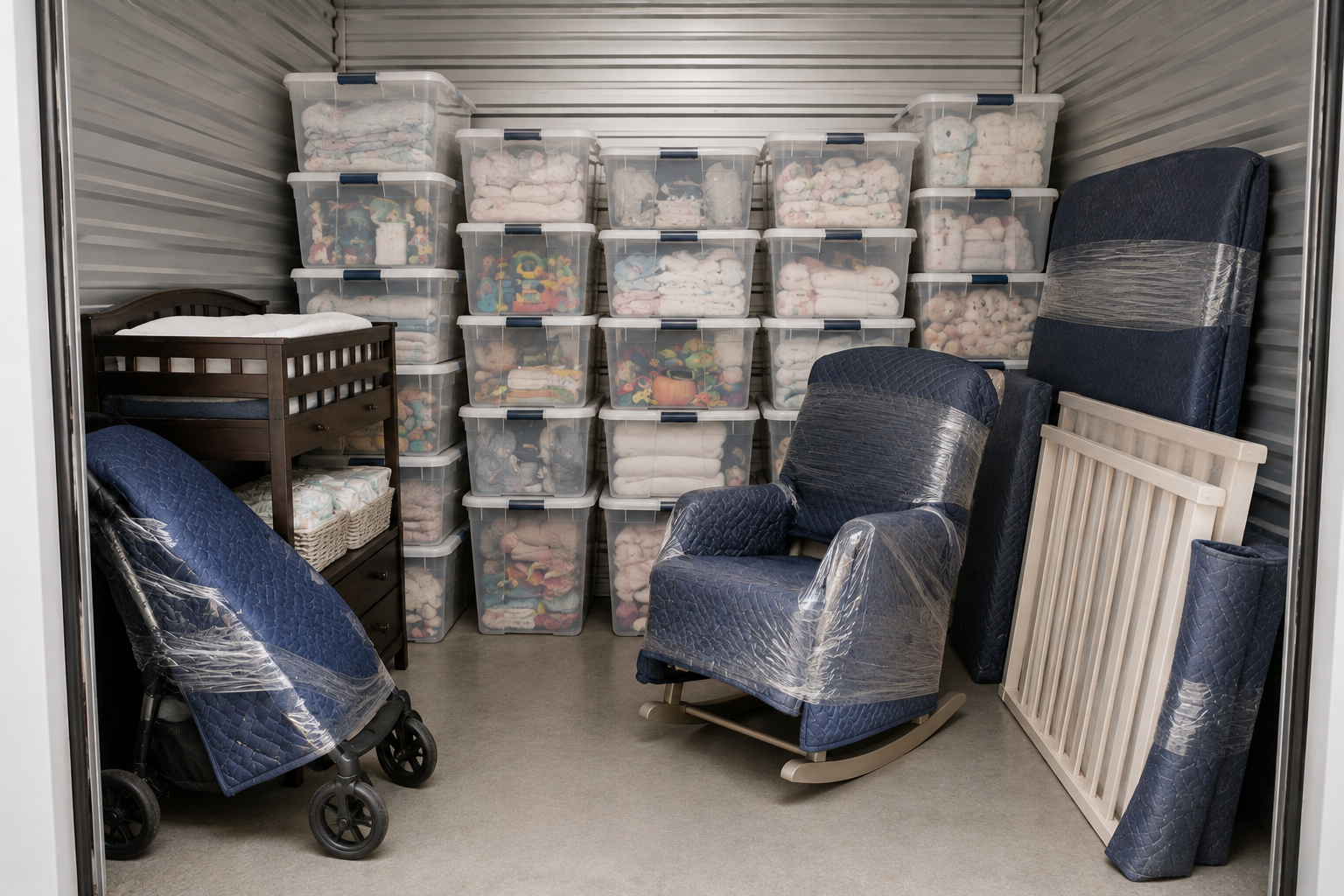
- Clear plastic bins with secure lids
- Acid-free tissue paper for delicate fabrics
- Furniture blankets
- Bubble wrap for fragile accessories
- Heavy-duty labels
- Moisture absorbers when appropriate
Avoid overfilling boxes, especially with heavy items like books or toys.
Store Clothing the Right Way
Baby clothes often hold sentimental value, but they also attract insects if stored improperly.
Before packing:
- Wash everything.
- Make sure clothing is completely dry.
- Fold items loosely.
- Separate by size.
- Store in sealed plastic containers instead of cardboard boxes.
Adding labels like "0–3 Months" or "6–12 Months" makes future organization much easier.
Protect Furniture and Large Equipment
Items like changing tables, cribs, gliders, and dressers require a little extra preparation.
Whenever possible:
- Disassemble furniture.
- Place screws and hardware in labeled bags.
- Tape hardware bags to the furniture.
- Wrap wood surfaces with moving blankets.
- Avoid stacking heavy boxes directly on wooden furniture.
Keeping furniture elevated slightly off the floor can also provide additional protection.
Should You Store a Car Seat?
Car seats deserve special attention.
Unlike many other baby items, car seats have expiration dates because materials naturally degrade over time.
The American Academy of Pediatrics recommends replacing expired car seats and avoiding the use of seats with unknown histories or damage.
If your seat will remain within its expiration period:
- Clean it according to manufacturer guidelines.
- Avoid harsh chemicals.
- Store it in a dry location.
- Keep the manual attached.
Choose Climate Controlled Storage for Sensitive Items
Not every baby item requires climate regulation, but many benefit from it.
A climate controlled storage unit helps reduce exposure to extreme heat, humidity, and temperature fluctuations.
Consider climate controlled storage for:
- Wooden nursery furniture
- Baby books
- Electronics
- Mattresses
- Clothing
- Fabric toys
- Family keepsakes
For durable plastic items or outdoor toys, standard
storage facilities may be perfectly suitable.

Organize Your Storage Unit
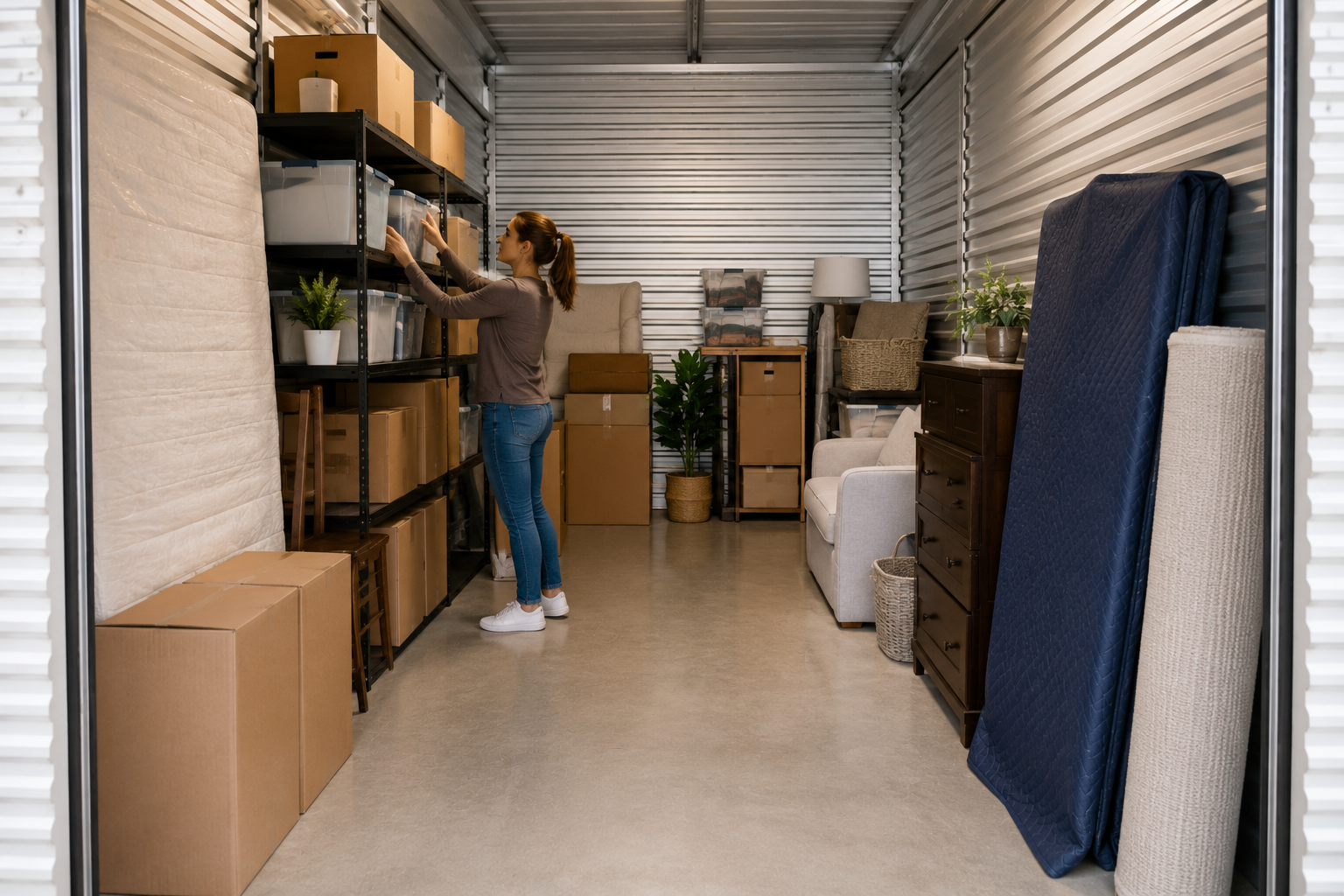
Packing thoughtfully today saves hours of searching later.
A simple layout works well:
Front of Unit
- Frequently accessed bins
- Seasonal clothing
- Baby gates
Middle
- Toys
- High chair
- Feeding supplies
Back
- Crib
- Bassinet
- Nursery furniture
- Large storage containers
Leave a narrow walking path through the unit so you can retrieve individual items without unpacking everything.
Research published in the Harvard Business Review shows that organized environments improve efficiency by reducing time spent searching for needed items, making thoughtful organization worthwhile even in long-term storage.
Label Everything Clearly.
Detailed labels make future unpacking much easier.
Instead of writing:
- Baby Stuff
Try labels like:
- Newborn Clothing
- Bottles and Feeding Supplies
- Nursery Decor
- Swaddle Blankets
- Baby Toys (0–12 Months)
- Bath Supplies
Some families also create a simple inventory on their phone to track where everything is stored.
Avoid Common Storage Mistakes
Many families unintentionally damage baby gear by making simple mistakes.
Avoid:
- Storing damp items
- Using weak cardboard boxes for long-term storage
- Forgetting expiration dates on safety products
- Placing heavy boxes on delicate equipment
- Leaving batteries inside electronics
- Skipping labels
Small preventative steps now can save money later.
When Drive Up Storage Makes Sense
If you're storing larger nursery furniture or expect to retrieve items occasionally, drive up storage offers added convenience.
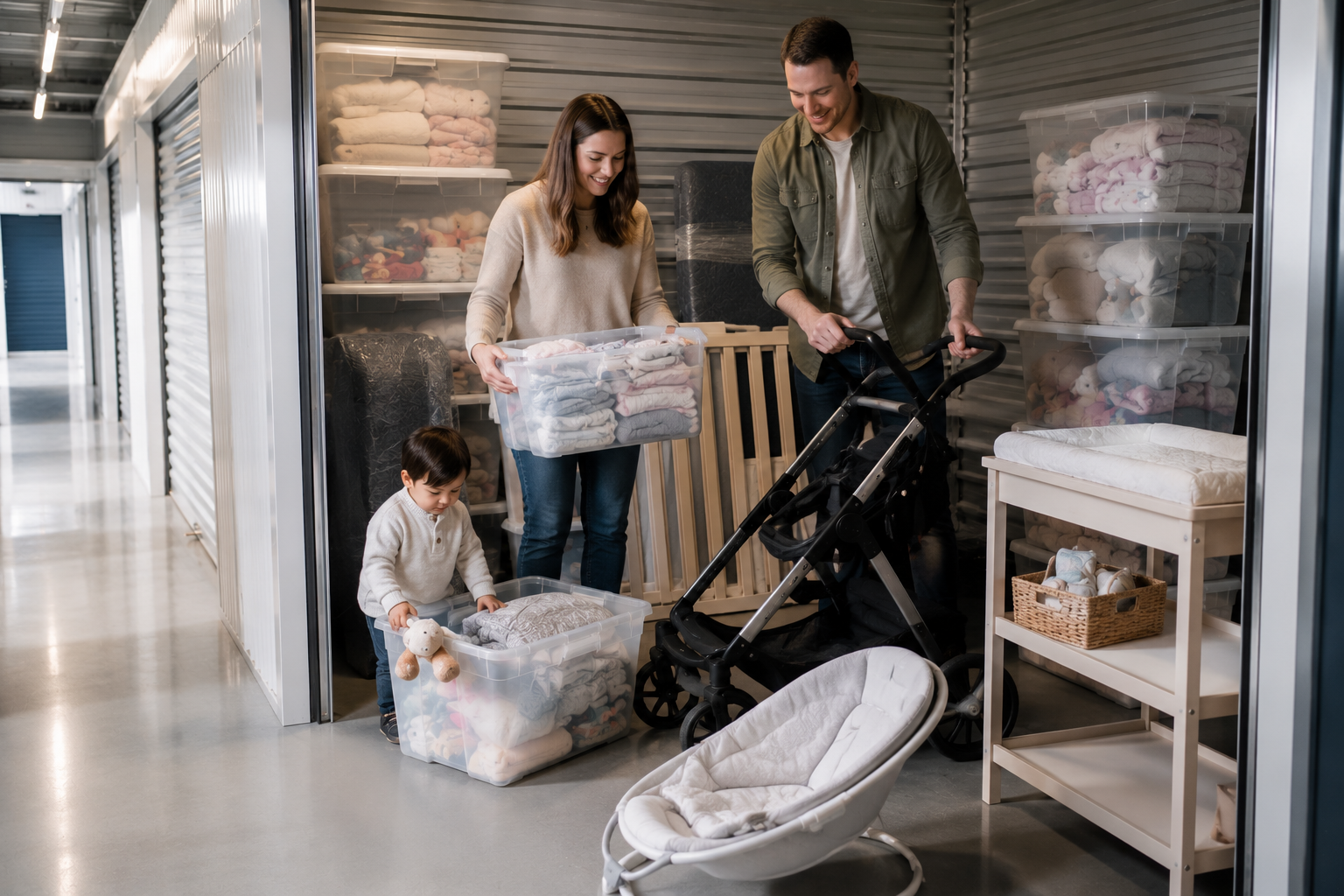
Loading bulky cribs, rocking chairs, or multiple storage bins is often easier when you can park your vehicle directly outside the unit.
For families balancing home organization with garage storage, seasonal decorations, or even business storage, having flexible storage solutions can simplify everyday life.
While boat storage, RV storage, vehicle storage, and enclosed storage serve different needs, choosing the right type of storage for each category helps maximize space both at home and within your storage unit.
Store Today, Save Tomorrow
Preparing baby gear properly means you'll spend less time replacing damaged items and more time enjoying them when you need them again. From cleaning and organizing to choosing the right self storage option, a little planning goes a long way.

Keep Your Baby Gear Safe with The Storage Advantage
Whether you're making room for a growing family, organizing your home, or planning for the future, The Storage Advantage offers flexible self storage, climate controlled storage, drive up storage, and other reliable storage solutions designed to protect your belongings. Visit https://thestorageadvantage.com/ to find the right storage unit and keep your baby gear clean, organized, and ready for its next chapter.