The Best Way to Store Appliances for Short- and Long-Term Use

Whether you're moving, remodeling your home, downsizing, or simply making extra room, storing household appliances correctly can save you from expensive repairs and replacements later. Refrigerators, washing machines, dryers, microwaves, dishwashers, and other household appliances contain delicate electrical and mechanical components that need proper preparation before storage.
The Storage Advantage offers a variety of self-storage options, including climate-controlled storage, drive-up storage, and secure storage, to help protect valuable household belongings during both short- and long-term storage.
Here's everything you need to know before storing your appliances.
Why Proper Appliance Storage Matters
Large appliances are significant investments. Moisture, dust, pests, extreme temperatures, and improper positioning can shorten their lifespan if you store them incorrectly.
According to the U.S. Department of Energy, regular appliance maintenance, including cleaning refrigeration coils and keeping appliances dry, improves efficiency and extends equipment life. These same maintenance principles also apply before storage, reducing corrosion and mechanical issues.
Taking a little extra time to prepare your appliances helps ensure they'll work properly when it's time to use them again.
Clean Every Appliance Thoroughly
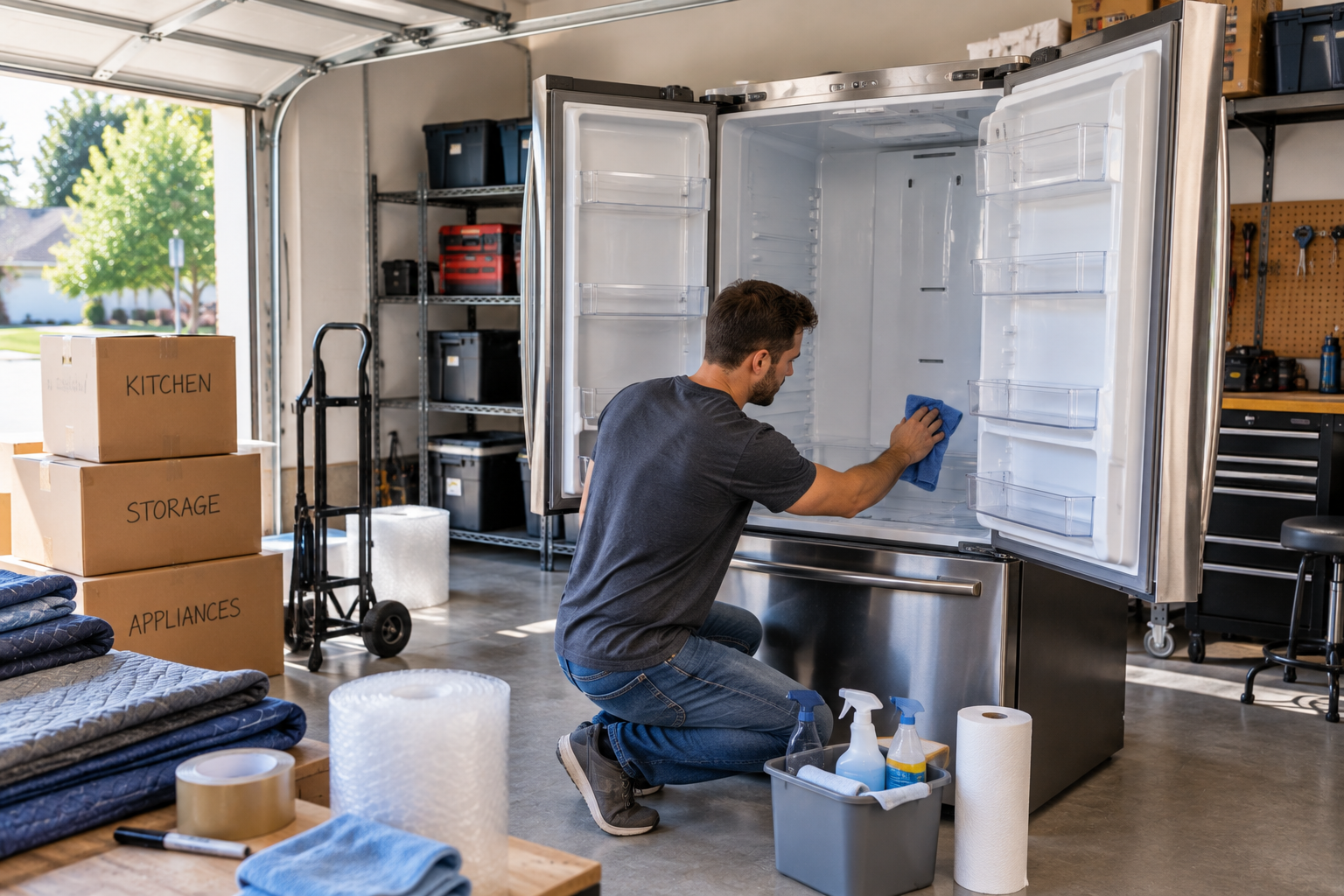
One of the biggest mistakes people make is storing appliances without cleaning them first.
Food particles, grease, detergent residue, and standing water can lead to:
- Mold growth
- Mildew
- Unpleasant odors
- Rust
- Pest problems
Before moving any appliance into a storage unit, make sure to:
- Remove all food and shelves from refrigerators and freezers.
- Clean ovens and microwaves inside and out.
- Empty and wipe down washing machines.
- Clean dishwasher filters.
- Vacuum refrigerator coils.
- Remove lint from dryers.
Allow everything to dry completely before packing.
Drain All Water Completely
Appliances that use water require additional preparation.
Water left inside hoses or internal components can:
- Freeze in cold temperatures
- Create mold
- Cause mineral buildup
- Damage internal parts
Drain completely:
- Washing machines
- Dishwashers
- Ice makers
- Refrigerators with water dispensers
- Portable air conditioners
Disconnect all water hoses and let appliances air-dry for at least 24 hours before moving them.
A study published by the National Association of Home Builders notes that moisture control remains one of the most effective ways to prevent mold growth in enclosed environments, making complete drying especially important before long-term storage.
Keep Appliance Doors Slightly Open
Many people instinctively close appliance doors before storing them.
That's actually one of the quickest ways to create mold and unpleasant odors.
Instead, leave refrigerator, freezer, dishwasher, and washing machine doors slightly open.
Benefits include:
- Better airflow
- Reduced moisture buildup
- Mold prevention
- Odor prevention
Some owners use towels or foam spacers to keep doors cracked open without stressing the hinges.
Secure Loose Components
Many appliances include removable parts that can shift during transportation.
Remove and separately pack:
- Refrigerator shelves
- Glass trays
- Microwave turntables
- Ice bins
- Water filters
- Washing machine hoses
- Dryer vent hoses
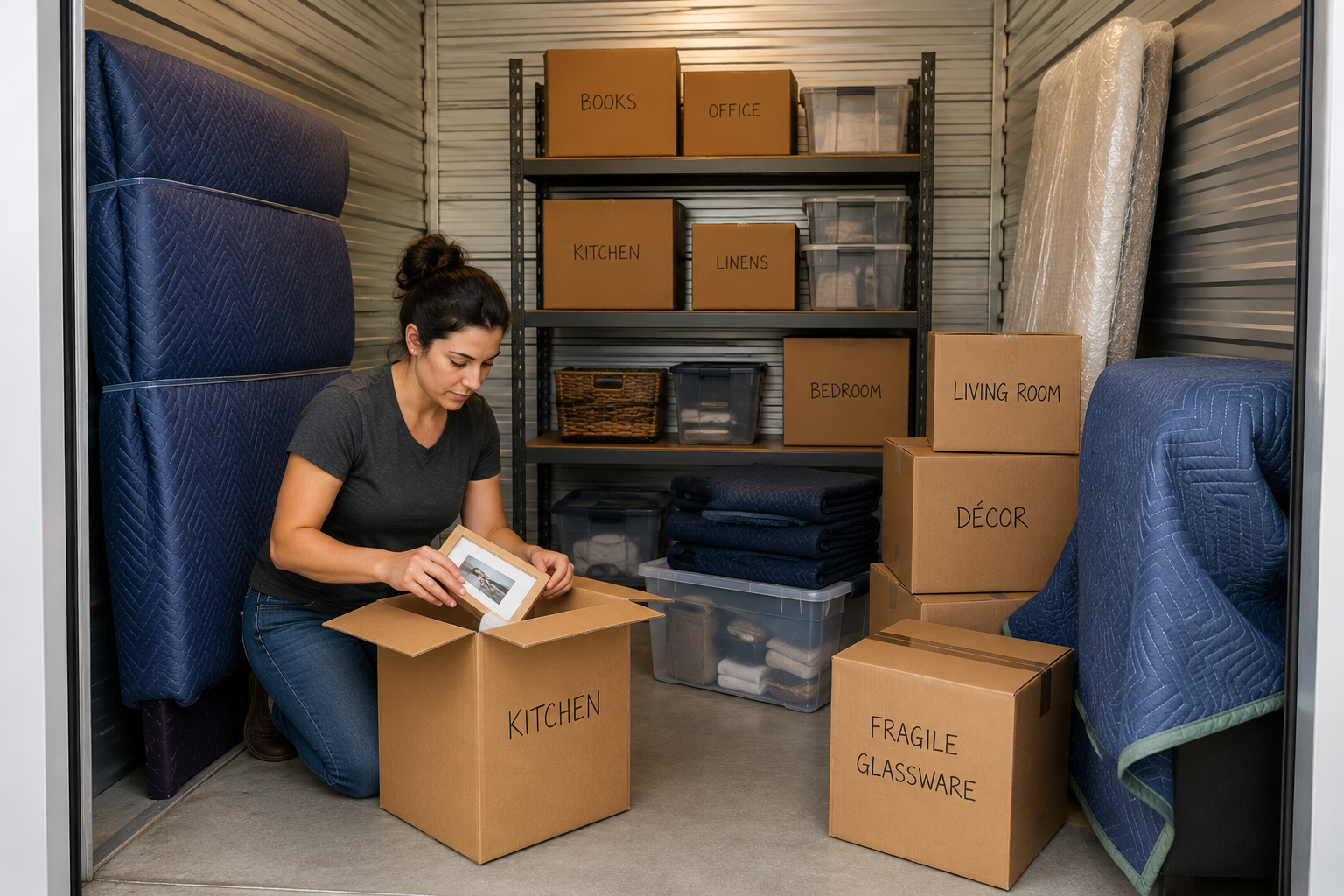
Wrap fragile pieces with moving blankets or bubble wrap and label each box clearly for easier reinstallation later.
Protect Exterior Surfaces
Even in secure storage, appliances can collect dust or get accidentally scratched during loading and unloading.
Avoid wrapping appliances tightly in plastic for long periods since trapped moisture may encourage condensation.
Instead, use:
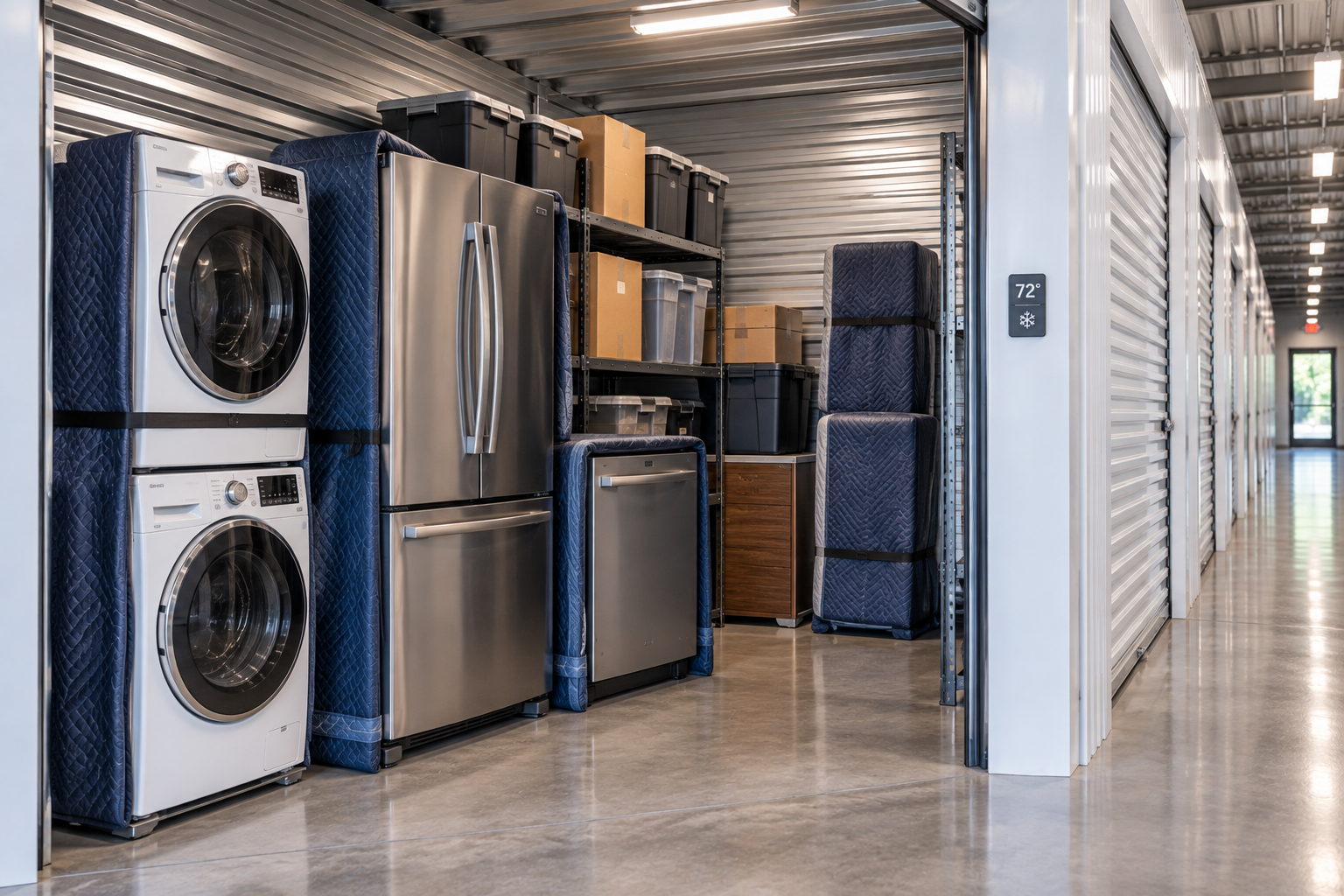
- Furniture blankets
- Breathable appliance covers
- Cotton moving pads
These materials help protect finishes while still allowing air circulation.
Choose the Right Storage Unit
Not every appliance requires the same storage environment.
| Appliance | Recommended Storage |
|---|---|
| Refrigerator | Climate-controlled storage |
| Freezer | Climate-controlled storage |
| Washer & Dryer | Climate-controlled preferred |
| Dishwasher | Climate-controlled preferred |
| Microwave | Standard indoor storage |
| Oven | Standard indoor storage |
| Air Conditioner | Climate-controlled recommended |
If your appliances contain electronics, rubber seals, digital displays, or sensitive components, climate controlled storage offers additional protection from temperature swings and humidity.

Store Appliances Upright
One of the most important storage rules is to keep appliances upright whenever possible.
This is especially true for:
- Refrigerators
- Freezers
- Wine coolers
Laying refrigerators on their sides may allow compressor oil to migrate into refrigerant lines.
If transportation requires placing one on its side, manufacturers commonly recommend standing it upright for several hours before plugging it back in, allowing fluids to return to their proper locations.
Following manufacturer guidance can help avoid compressor damage.
Don't Stack Heavy Items on Appliances
Although appliances may appear sturdy, they aren't designed to support significant weight.
Avoid placing on top of stored appliances:
- Heavy boxes
- Furniture
- Exercise equipment
- Large totes
Extra weight may:
- Bend metal panels
- Damage electronic controls
- Warp doors
- Crack glass surfaces
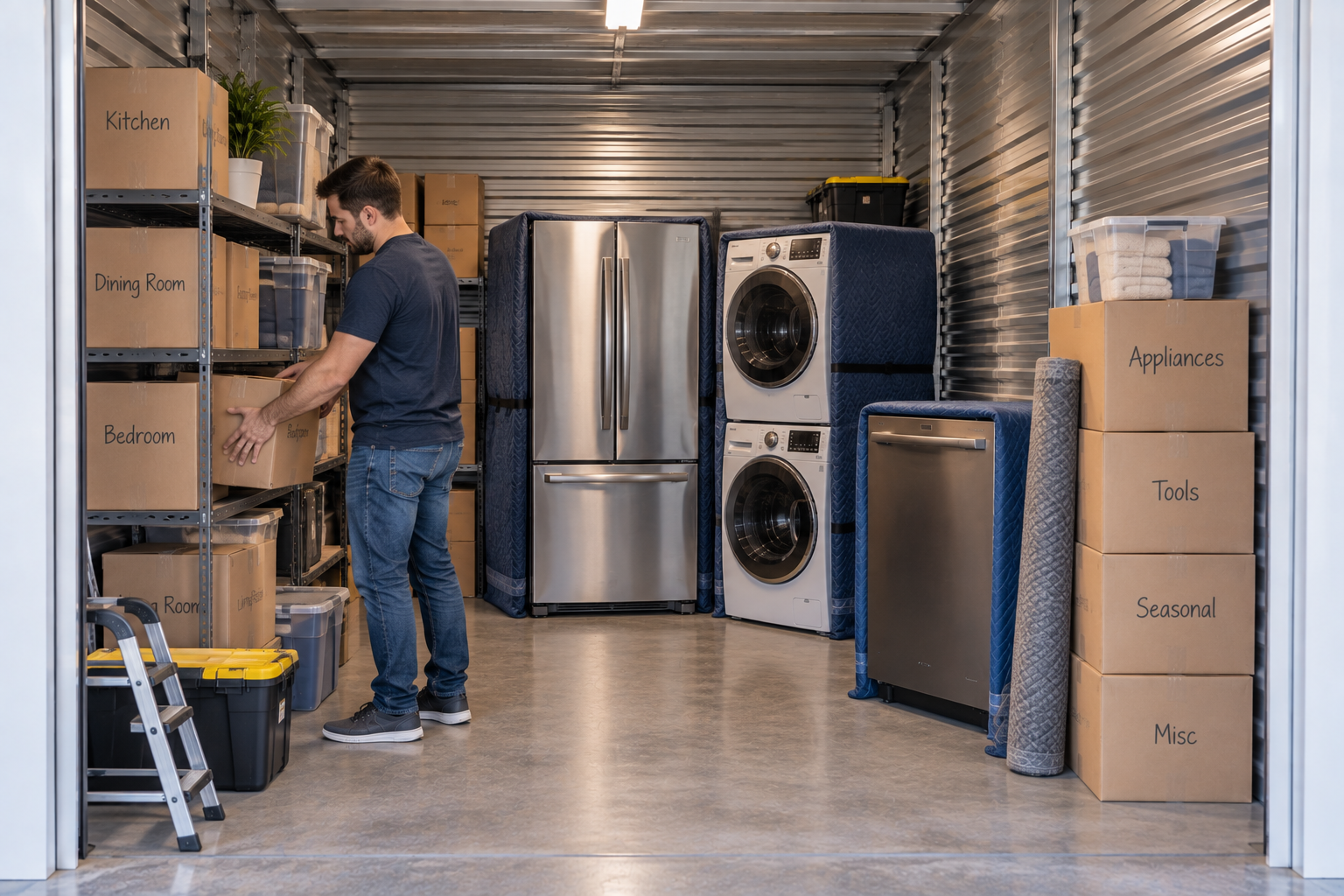
Instead, place appliances along storage unit walls, leaving enough room for ventilation and easy access.
Protect Against Dust and Pests
Even clean storage facilities can accumulate dust over time.
Before storing appliances:
- Seal electrical cords.
- Tape manuals inside a plastic bag.
- Cover air vents with breathable material if appropriate.
- Inspect appliances for food crumbs.
Avoid placing cardboard directly against appliances, as it may attract insects in humid conditions.
Regularly checking stored belongings, if possible, can also help identify issues early.
Research from the Environmental Protection Agency highlights that moisture management and cleanliness are among the most effective ways to discourage mold and pest-related problems in stored household items.
Label and Organize Everything
If you're storing multiple household items, organization makes retrieval much easier.
Label each appliance with:
- Owner's manual location
- Matching accessories
- Power cords
- Installation hardware
Keep small parts together in labeled bags taped securely to the appliance or stored in a clearly marked container.
This saves time when moving back into your home.
How Long Can Appliances Stay in Storage?
Properly prepared appliances can remain safely in storage for months or even years.
The key factors include:
- Complete cleaning
- Thorough drying
- Proper ventilation
- Stable temperatures
- Secure placement
Choosing high-quality storage solutions significantly reduces the risk of unnecessary wear during extended storage periods.
Whether you're storing one appliance during a kitchen remodel or furnishing an entire home between moves, selecting the right residential storage option makes a noticeable difference.
Why Choose The Storage Advantage for Appliance Storage?
When storing valuable household appliances, selecting the right facility matters just as much as preparing the appliances themselves.
The Storage Advantage offers flexible self storage options designed to accommodate everything from a single microwave to an entire home's worth of appliances. With options including climate controlled storage, drive up storage, enclosed storage, and other convenient storage spaces, you can choose the solution that best fits your needs while helping protect your belongings.

Store Your Appliances with Confidence
Proper preparation helps your appliances remain clean, functional, and ready to use whenever you need them again.
From thoroughly cleaning and drying each unit to choosing the right storage unit, a few simple steps can prevent costly damage and extend your investment's life.
If you're looking for dependable storage solutions, visit The Storage Advantage at https://thestorageadvantage.com/ to explore storage options that fit your home, moving, or renovation needs.