
Boat Storage Options: What Works Best for Long-Term Storage
Josh Neimark • December 31, 2025

Boat Storage Options: What Works Best for Long-Term Storage
'If you own a boat, you know it's more than just a recreational vehicle; it's an investment. Whether it's a fishing boat, pontoon, sailboat, or personal watercraft, proper storage plays a significant role in extending your boat's lifespan and ensuring it's ready when the water calls. But when the off-season hits or you're heading into a long hiatus, what's the best way to store your boat?
In this guide, we'll break down the most effective long-term boat storage options, their pros and cons, and how The Storage Advantage
offers reliable, secure, and convenient self-storage solutions tailored to boat owners.
Why Proper Boat Storage Matters
Before we dive into storage types, let's understand why this matters. Poor storage can lead to: Corrosion or mold from excess moisture Sun damage to the hull, upholstery, and dashboard Mechanical issues from temperature fluctuations Pest infestation or structural wear Using a purpose-built storage facility prevents most of these issues, saving you from costly repairs down the line.Types of Boat Storage: Pros, Cons, and Best Use Cases
Here's a detailed comparison of the most popular long-term storage options for boats:| Storage Type | Protection Level | Accessibility | Ideal For | Climate Control | Security |
| Outdoor Boat Storage | Basic (no cover) | High | Larger boats or trailers | ❌ | ✅ |
| Covered Outdoor Storage | Moderate | High | Mid-size boats | ❌ | ✅ |
| Enclosed Boat Storage (Garage-Style) | High | Medium | Small to mid-size boats | ❌ or ✅ | ✅✅ |
| Climate Controlled Storage Units | Very High | Medium | Small boats or expensive vessels | ✅ | ✅✅ |
| Dry Stack Storage (Marina) | Very High | Low (requires scheduling) | Small boats | ✅ | ✅✅ |
| Boat Slip / Marina In-Water | Low | High | Boats used year-round | ❌ | Varies |
1. Outdoor Boat Storage (Uncovered)
This is the most budget-friendly option. Typically found in storage facilities that cater to RV and boat parking, your boat is parked in a designated space.Pros
Affordable, fast access, suitable for large trailersCons
Exposed to sun, rain, snow, and pestsBest For
Owners who use a weatherproof boat cover and want affordable storagePro Tip
Use a marine-grade cover and elevate the trailer to allow drainage.2. Covered Outdoor Storage
Think of this as carport-style storage for your boat. You still park outdoors, but with overhead protection from the sun and precipitation.Pros
Affordable with some protection from the elementsCons
Doesn't prevent moisture buildup or pestsBest For
Seasonal boaters looking for budget-friendly, semi-protected storage3. Enclosed Boat Storage (Drive-Up Units)
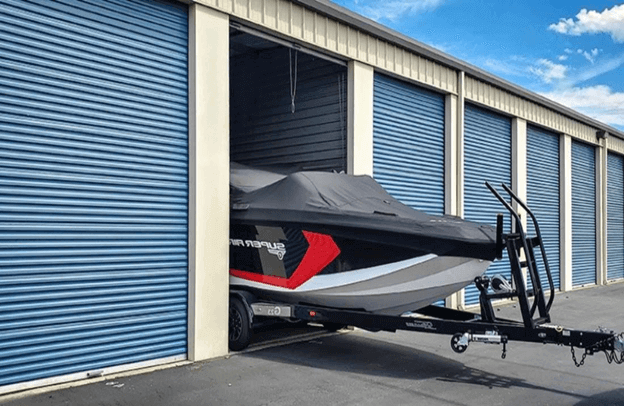
Also called garage-style storage, these drive-up storage units give your boat four-wall protection. Perfect for smaller boats or personal watercraft (PWCs).Pros
Excellent protection from the weather and theftCons
May not fit larger boats; availability can be limitedBest For
Small boats, jet skis, or trailers needing complete protection Bonus: These secure storage units often include keycode access and security cameras for added peace of mind.4. Climate-Controlled Storage Units
These are typically indoor, temperature- and humidity-regulated storage spaces. They're best suited for luxury boats or sensitive equipment.Pros
Best protection from temperature swings, humidity, and moldCons
More expensive and size-limitedBest For
High-end vessels, electronics, or long-term indoor storage According to the American Boat and Yacht Council, controlling humidity is crucial for preventing electrical damage and mold buildup during long-term storage.5. Dry Stack Storage (at Marinas)
Dry stack storage keeps your boat stacked with others in a warehouse-style marina facility. While secure and climate-controlled, this type typically requires scheduling to retrieve your boat.Pros
Excellent protection and professional handlingCons
Inconvenient access, limited to smaller boatsBest For
Infrequent boaters or winter storage near water6. In-Water Marina Slips (Not Recommended for Long-Term Storage)
While convenient for frequent use, storing your boat in water long-term increases the risk of hull damage, algae buildup, and theft. Not recommended unless you're boating year-round and performing regular maintenance.Key Features to Look for in Long-Term Boat Storage
When comparingstorage facilities, focus on these essentials:Security
Choosesecure storagefacilities with fencing, controlled gate access, surveillance cameras, and well-lit areas.Accessibility
Consider how often you need access to your boat. If you're storing for a full season or longer, accessibility may matter less than protection.Climate Control (Optional but Ideal)
In regions with extreme temperature swings or high humidity, climate-controlled storage protects sensitive boat materials and electronics.Space Size
Ensure the storage unit or parking space fits the entire boat and trailer, leaving room to maneuver safely.Insurance & Registration
Even in storage, some facilities require up-to-date insurance and registration for liability purposes. Check ahead to avoid surprises.Seasonal Considerations for Boat Storage
Storing your boat for the winter? Or prepping for hurricane season? Here are a few key seasonal tips:Winterization Tips
Drain fuel and water tanks Add antifreeze Remove electronics and valuables Use a breathable cover Lubricate moving partsRainy Season Tips
Park with a slight incline to allow water runoff Use a moisture absorber in enclosed units Inspect the cover regularly for leaksSummer Storage
Choose a shaded or covered space if available Consider using UV-resistant wax on the hull Check tire pressure and battery if storing on a trailerEnclosed vs. Outdoor Boat Storage: What's the Best Long-Term Choice?
Here's a side-by-side breakdown:| Feature | Enclosed Storage | Outdoor Storage |
| Protection from Elements | ✅✅✅ | ❌ |
| Security | ✅✅✅ | ✅ |
| Price | $$$ | $ |
| Accessibility | Moderate | High |
| Climate Control | Optional | ❌ |
| Best For | Long-term storage, high-value boats | Short-term or budget-conscious storage |
Can You Store a Boat in a Standard Storage Unit?
Yes, but only if the unit is long and wide enough. A typical 10x30 or 12x35 drive-up storage unit may be suitable for a smaller boat or trailer. For anything larger, outdoor boat storage or a dedicated parking space is the better option.Boat Storage and Life Transitions: Why It Matters
Many people seek self-storage solutions during life changes, downsizing, relocating, or even going on extended travel. A secure place to store your boat lets you focus on the transition without worrying about theft, sun damage, or weather exposure. Other examples of when long-term boat storage makes sense: Moving out of state Deployments or travel sabbaticals Seasonal boating areas Selling your boat (keeping it showroom-ready)The Storage Advantage: Long-Term Boat Storage You Can Trust
At The Storage Advantage, we understand that your boat is more than just a possession; it's a passion. That's why we offer: Multiple storage sizes to fit boats of all kinds Drive-up access for easy trailer loading/unloading Climate-controlled units for delicate equipment Secure storage spaces with surveillance and gated access Specialty RV and boat storage options across all our facilities Whether you need indoor, outdoor, or covered storage, our flexible storage solutions make it easy to protect your boat, season after season.Find Your Perfect Boat Storage Solution Today
Store Smarter, Boat Longer
Choosing the proper boat storage for the long haul doesn't have to be complicated. Whether you're looking for covered parking, climate-controlled storage units, or secure drive-up storage, The Storage Advantage has a solution that works for you. Take the stress out of boat storage. Visit https://thestorageadvantage.com/ and find your ideal storage facility today. Find nearby storage units here: https://thestorageadvantage.com/storage-units-near-me.'
By Frank Bruechner
•
September 2, 2026
Downsizing can be an exciting opportunity to simplify your lifestyle, reduce household expenses, and create a more manageable living space. Whether you're moving into your first smaller home, helping a family member transition, or simply reducing clutter, one challenge often remains the same: deciding what to do with belongings that no longer fit your new space. That's where self storage becomes an invaluable solution. Instead of rushing difficult decisions or overcrowding your new home, renting a storage unit gives you the flexibility to move at your own pace while keeping your possessions secure and accessible. At The Storage Advantage , we offer a variety of storage solutions, including climate controlled storage, drive up storage, residential storage, business storage, and vehicle storage options designed to make life's transitions easier. Why Downsizing Can Feel Overwhelming Moving to a smaller home often means reducing the amount of furniture, seasonal decorations, keepsakes, recreational equipment, and household items you own. For many people, this process can be emotionally and physically demanding. Research published by the American Psychological Association (APA) has consistently identified moving as one of life's significant stressors, particularly when multiple changes occur simultaneously. Having a structured moving plan helps reduce stress and improves decision-making throughout the transition. Instead of making permanent decisions under pressure, using a storage unit lets you separate the moving process from decluttering. Benefits of Using Self Storage While Downsizing Self storage offers flexibility at every stage of your move. Downsizing Challenge: How Self Storage Helps Smaller closets : Store seasonal clothing and decorations Limited garage space : Keep tools, outdoor equipment, and recreational gear Extra furniture: Hold furniture until you decide whether to sell or keep it Family heirlooms: Preserve meaningful belongings without overcrowding your home Temporary housing: Store possessions until your permanent move is complete Rather than forcing everything into your new home, storage spaces allow you to create a comfortable living environment from day one. Start Decluttering Before You Pack One of the biggest mistakes people make is packing everything first and sorting later. Instead, walk through each room and divide belongings into four categories: Keep Donate Sell Store Items that you use every day should move directly into your new home. Items you only use occasionally are often excellent candidates for residential storage. This simple process reduces moving costs while making unpacking much easier. Store Seasonal Items Instead of Crowding Your Home Many homes simply don't have enough room for every holiday decoration, winter coat, patio cushion, or camping accessory. Seasonal belongings often take up valuable storage space in the home despite being used for only a few weeks each year. A self storage unit provides convenient space for: Holiday decorations Seasonal clothing Lawn equipment Sporting goods Patio furniture Gardening supplies Camping gear Keeping these items in storage creates a cleaner, more organized living space throughout the year. Choose the Right Storage Unit Not every storage need is the same. The right storage unit depends on what you're storing. Climate Controlled Storage Climate controlled storage helps protect temperature-sensitive belongings such as: Wood furniture Electronics Photographs Artwork Documents Musical instruments Research from the National Park Service Museum Handbook notes that stable temperature and humidity conditions help reduce deterioration of paper records, wood, textiles, photographs, and other valuable household items. Drive Up Storage If you're storing heavier items such as furniture, appliances, or multiple moving boxes, drive up storage offers added convenience by allowing you to load and unload close to your unit. This can significantly reduce lifting time during moving day.
Is Your Gas-Powered Equipment Sitting Idle? Here’s How to Store It Safely and Keep It Running Strong
By Alicia Aguirre
•
April 13, 2026
Discover how to store gas-powered equipment the right way. Learn fuel tips, cleaning methods, and storage strategies to protect your tools year-round.