How to Store a Mattress in a Storage Unit

Ryan Bustamante • March 16, 2026

A good mattress is not cheap, and it does not take much to ruin one. Moisture, poor support, and tight plastic wrapping can quietly damage the inside while it sits in storage. By the time you notice, the comfort is gone.

Storing a mattress correctly keeps it clean, supportive, and worth using again.


Why mattress storage can go wrong

Mattresses are built from layers of foam, springs, and fabric. Those layers can shift or trap moisture if you lean the mattress the wrong way or seal it too tightly. Over time that leads to sagging, odors, and sometimes mold.

The Sleep Foundation notes that mattresses exposed to damp, poorly ventilated spaces have a higher risk of developing mold inside the layers, which is not something you want to sleep on later.


Step 1: Clean before you pack

Vacuum both sides of the mattress. Pay attention to seams and tufted areas where dust collects. Spot clean stains with a cleaner appropriate for your mattress type and let everything dry completely.

Do not rush this step. Any moisture that goes into storage stays there.


Step 2: Use a breathable mattress cover

A mattress bag or cover is essential. Look for one that is durable but still allows some airflow. Slide the mattress in carefully and seal the end with tape.

Avoid wrapping the mattress tightly in plain plastic sheeting for long term storage. That traps humidity and can encourage mold or mildew.

If you want a quick comparison of methods and materials, National Storage has a post specifically on how to store a mattress   with simple, step by step guidance.


Step 3: Store the mattress flat

In a storage unit, the safest position for a mattress is flat, not on its side. Standing it up saves floor space, but can cause springs or foam layers to shift if it stays that way for months.

Place it on pallets, a platform, or other items that keep it off the bare floor. Avoid stacking heavy boxes or furniture on top of it.


Step 4: Choose the right type of unit

Mattresses prefer stable temperature and low humidity. If you live in an area with humid summers or cold winters, a climate controlled storage unit is worth considering.

You can view all National Storage locations and explore which sites offer climate controlled options and unit sizes that match your needs.


Step 5: Plan for long term storage

If this mattress will be in storage for a long stretch, it helps to check on it occasionally. Make sure the cover is intact, nothing has been stacked on top, and there are no signs of moisture.

For more big picture guidance, the article on the top tips for storing items for the long term   walks through how to think about long duration storage, from packing choices to climate considerations.


Keeping your mattress worth sleeping on

A mattress that has been stored correctly should feel familiar when you bring it back home. Clean it, cover it, keep it flat, and give it a unit that will not fight against it. That is usually all it needs.


When you are ready to use it again, remove the cover and allow the mattress to air out for a few hours before putting bedding back on it. This simple step helps release any lingering odors from storage and lets the materials settle back into place.


With a little preparation and the right storage environment, your mattress can come out of storage just as comfortable as the day it went in.


By Frank Bruechner • October 16, 2026
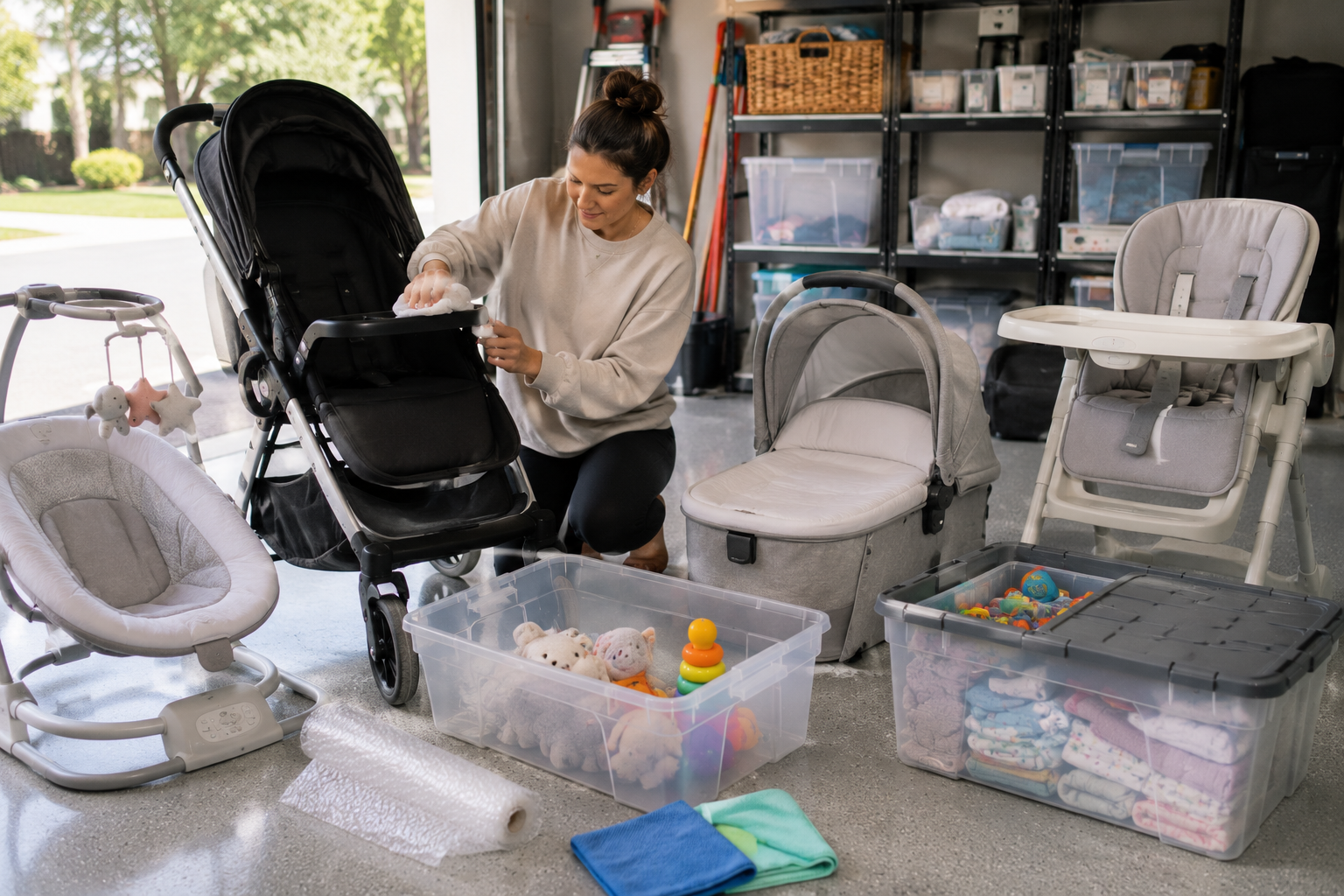
Babies grow quickly, and before you know it, the bassinet, stroller, high chair, and tiny clothes are no longer needed. While it may be tempting to donate or sell everything, many families keep baby gear for a future child or pass it along to relatives. The challenge is finding a way to preserve these items without letting them take over your home. Self-storage is one of the easiest ways to keep bulky baby gear protected while freeing up valuable living space. Whether you're storing items for a year or several years, proper preparation helps ensure they're clean, safe, and ready when you need them again. Why Proper Storage Matters Baby gear is an investment. Strollers, cribs, swings, carriers, and feeding equipment often cost hundreds or even thousands of dollars to replace. Storing them correctly can extend their lifespan and reduce unnecessary waste. Research published in the Journal of Environmental Psychology has also found that cluttered living environments can increase stress and reduce people's ability to focus. Moving infrequently used items into organized storage units can create a more functional and relaxing home while keeping important belongings accessible for the future. Start by Sorting Everything  Before packing anything away, divide your baby items into categories.

By Frank Bruechner • October 10, 2026
Choosing a self storage unit often seems straightforward. Many people assume that if everything technically fits inside the unit, they've selected the right size. In reality, choosing a storage unit that's too small can create unnecessary stress, increase the risk of damaged belongings, and even cost more over time.  Whether you're storing household furniture during a move, seasonal decorations, business inventory, or a recreational vehicle alongside personal belongings, selecting the proper amount of storage space matters. The right unit should provide enough room to hold your items while keeping them organized, accessible, and protected. This guide explains what happens when you underestimate your storage needs, how to avoid common sizing mistakes, and why The Storage Advantage offers flexible self storage options designed for a wide variety of storage situations.