How to Prepare Your Motorcycle for Long-Term Storage

Whether you're storing your motorcycle for the winter, leaving for an extended trip, or simply taking a break from riding, proper preparation is essential.
Longterm storage without the right precautions can lead to dead batteries, flatspotted tires, rust, fuel problems, and costly repairs.
The good news is that a little preparation goes a long way. By following a few simple maintenance steps and choosing the right selfstorage option, you can keep your bike in excellent condition until you're ready to ride again. The Storage Advantage offers a variety of storage units, including enclosed and climatecontrolled options, that help protect valuable vehicles throughout the storage period.
Why Proper Motorcycle Storage Matters
Motorcycles are built to withstand the elements while being ridden, but sitting unused for months presents different challenges. Moisture, temperature changes, fuel degradation, and battery discharge can all affect performance.
According to the U.S. Department of Energy, gasoline can begin degrading in as little as three to six months, potentially causing deposits that clog fuel systems if left untreated. Proper fuel preparation before storage helps reduce these risks.
Instead of parking your bike in an exposed driveway or crowded garage,
secure storage protects it from weather, dust, accidental damage, and theft.
| Before Storage | Why It Matters |
|---|---|
| Wash and dry motorcycle | Prevents corrosion and protects paint |
| Stabilize fuel | Reduces fuel breakdown |
| Change engine oil | Removes contaminants |
| Maintain battery | Prevents discharge |
| Inflate tires properly | Helps avoid flat spots |
| Cover motorcycle | Keeps dust and moisture away |
| Store in enclosed unit | Provides added protection |
Step 1: Thoroughly Clean Your Motorcycle
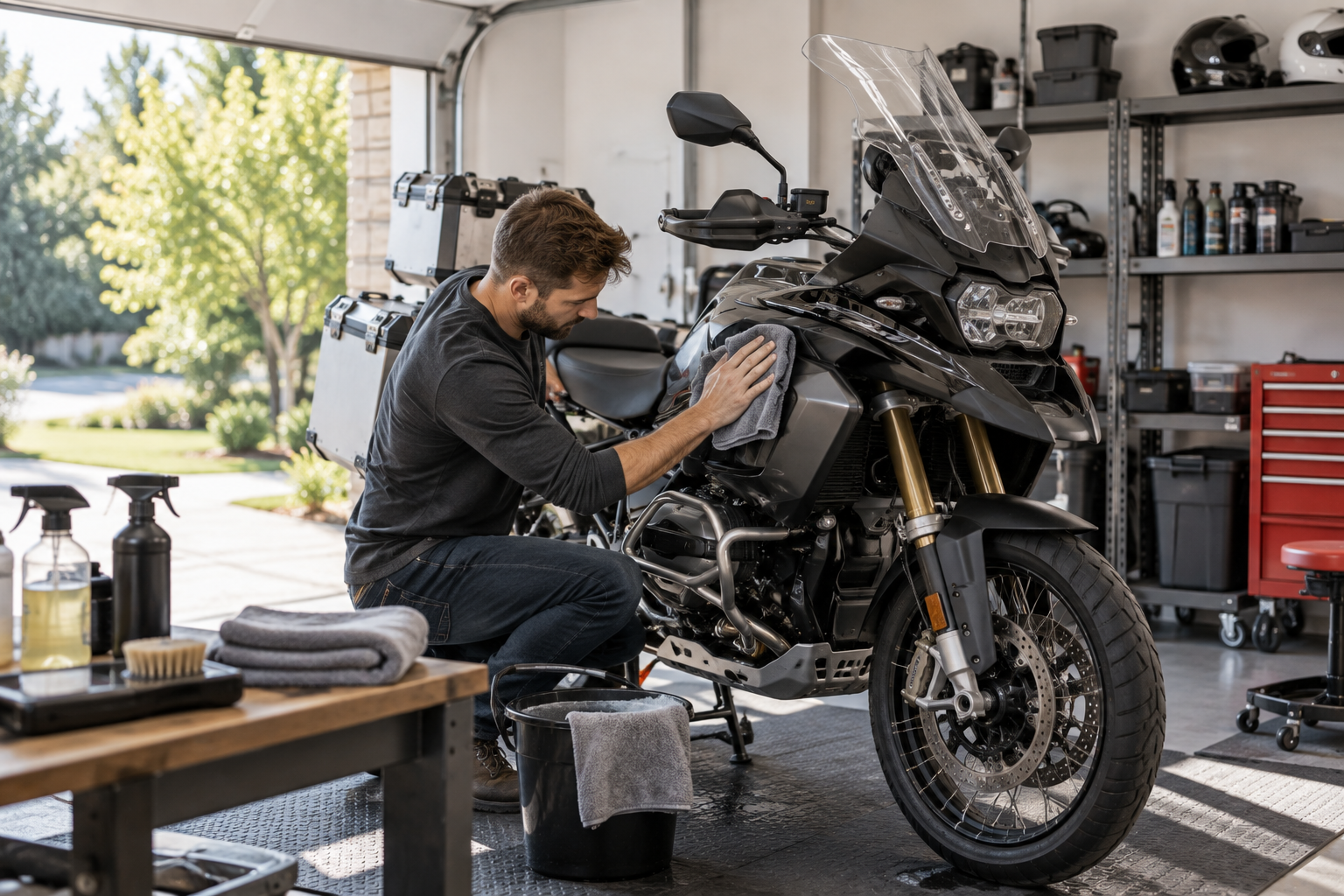
Always begin with a complete wash.
Road grime, bugs, mud, and salt can trap moisture against metal surfaces, leading to corrosion during storage.
Be sure to:
- Wash the entire motorcycle
- Dry every surface completely
- Apply wax to painted surfaces
- Lubricate exposed metal components
- Clean and protect chrome finishes
Don't forget areas underneath the bike where dirt often accumulates.
Step 2: Change the Oil and Filter
Used engine oil contains acids, contaminants, and combustion byproducts that can sit inside the engine during storage.
Changing the oil before storing your motorcycle keeps internal engine components lubricated and reduces corrosion risk.
If your manufacturer's maintenance schedule recommends changing the filter at the same time, do so before storage.
A study published by SAE International has shown that contaminants in used lubricants contribute to increased engine wear over time, making fresh oil beneficial before extended inactivity.
Step 3: Protect the Fuel System
Old gasoline is one of the biggest causes of springtime starting problems.
To reduce fuel deterioration:
- Fill the fuel tank nearly full
- Add a quality fuel stabilizer
- Run the engine for several minutes so stabilized fuel reaches the fuel injectors or carburetor
Keeping the tank full also minimizes condensation, reducing the likelihood of rust forming inside the tank.
Step 4: Take Care of the Battery
Motorcycle batteries naturally lose charge when sitting unused.
You have two good options:
- Connect the battery to a smart battery maintainer
- Remove the battery and store it indoors if power isn't available
Avoid allowing the battery to become completely discharged, as this can shorten its lifespan.
Battery manufacturers generally recommend maintaining batteries during extended storage to maximize service life.
Step 5: Inflate the Tires
Tires slowly lose air pressure over time.
Before storing your motorcycle:
- Inflate tires to the manufacturer's recommended pressure
- If possible, use front and rear stands to lift the tires off the ground
- If stands aren't available, roll the motorcycle occasionally during storage to help prevent flat spots
The National Highway Traffic Safety Administration (NHTSA) notes that proper tire inflation supports tire longevity and overall safety.

Step 6: Protect Against Moisture
Moisture is one of the biggest threats during long-term storage.
Consider:
- Using moisture absorbers
- Keeping storage areas well ventilated
- Choosing climate controlled storage when storing for extended periods or in humid environments
Climate controlled units help minimize temperature swings that may contribute to condensation on metal components.
For motorcycles with leather seats or accessories, maintaining stable humidity also helps preserve materials.
Step 7: Cover the Motorcycle Properly
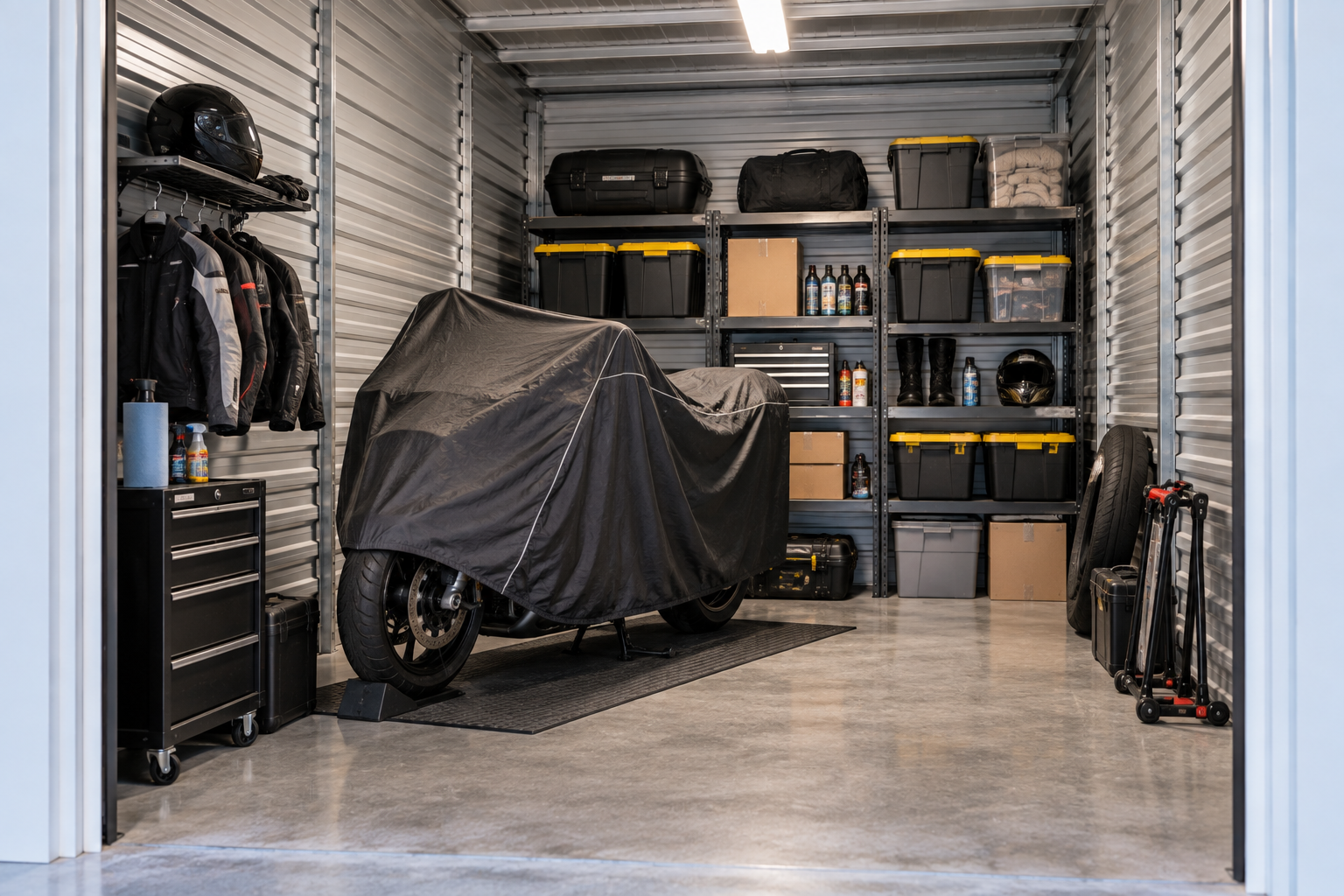
A breathable motorcycle cover protects against dust while allowing trapped moisture to escape.
Avoid using completely airtight plastic tarps, which can trap condensation and encourage rust.
Choose a cover specifically designed for indoor storage whenever possible.
Choosing the Right Storage Option
Not every storage solution provides the same level of protection.
Here's how different options compare:
| Storage Type | Best For |
|---|---|
| Driveup storage | Easy loading and unloading |
| Climate controlled storage | Long-term protection from temperature fluctuations |
| Enclosed storage | Added protection from weather and debris |
| Residential storage | Seasonal household overflow alongside vehicle storage |
If you own multiple recreational vehicles, many storage facilities also offer dedicated boat storage and RV storage, making it convenient to keep all seasonal equipment in one location.
Additional Storage Tips
Before locking up your motorcycle:
- Check coolant levels (if applicable)
- Lubricate the chain
- Plug the exhaust (using approved methods) to discourage pests
- Verify all fluids are at proper levels
- Leave the transmission in neutral if using stands
- Keep your insurance and registration documents organized
Taking photos before storage can also provide a helpful record of the motorcycle's condition.
Common Motorcycle Storage Mistakes
Many owners accidentally create problems by skipping small but important steps.
Avoid these common mistakes:
- Storing a dirty motorcycle
- Leaving old fuel in the tank
- Forgetting battery maintenance
- Parking on underinflated tires
- Using non-breathable covers
- Leaving the motorcycle exposed outdoors for months
- Choosing damp storage spaces
These simple oversights can result in expensive maintenance once riding season returns.
Why SelfStorage Is an Excellent Choice
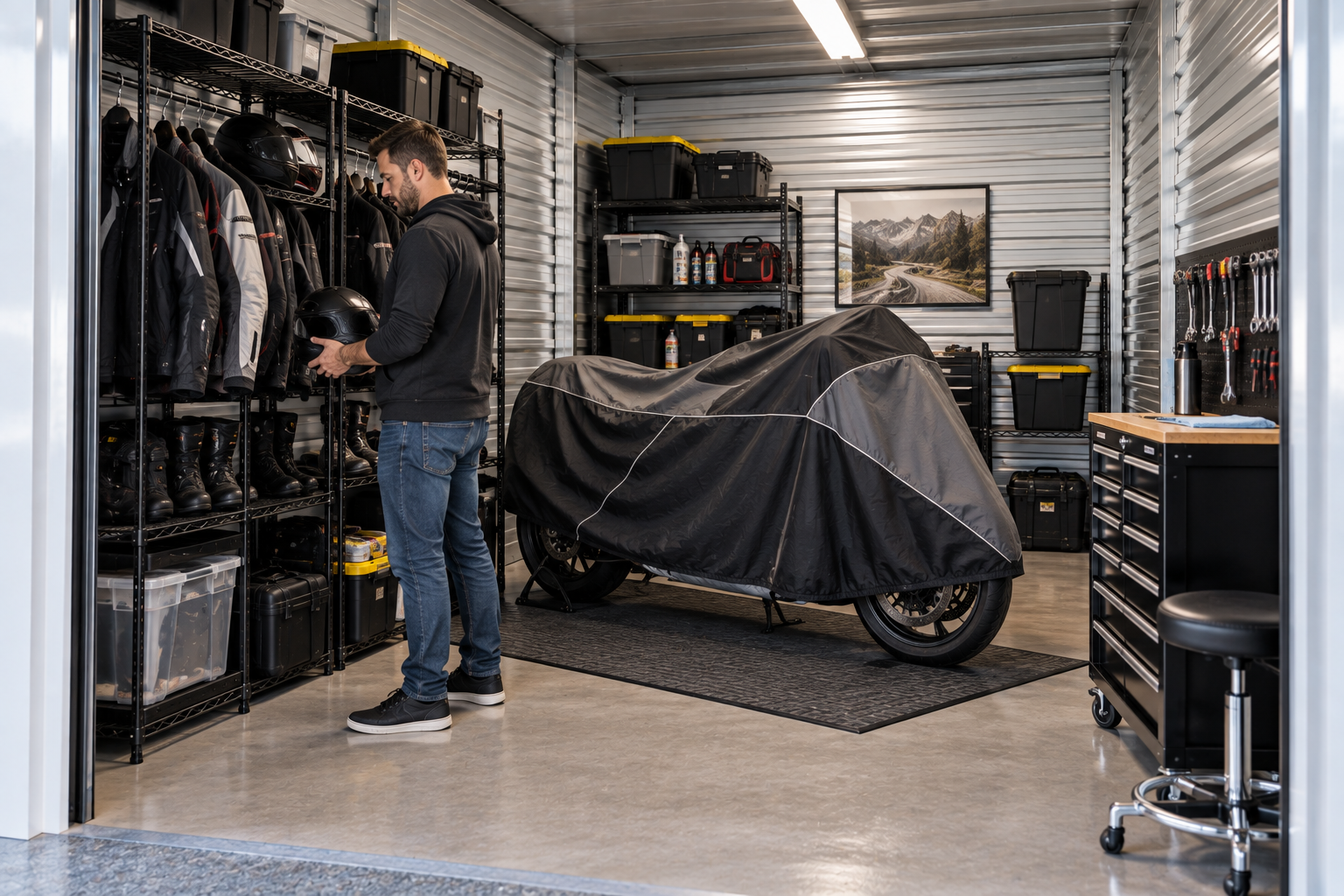
Home garages aren't always ideal. They often become crowded with tools, lawn equipment, seasonal decorations, or household items.
Professional storage spaces provide a cleaner, more organized environment and free up valuable space at home.
Whether you're storing one motorcycle or multiple recreational vehicles, secure storage solutions offer:
- Flexible storage options
- Convenient drive up access
- Clean storage environments
- Climate controlled units for sensitive vehicles
- Space for motorcycles, boats, RVs, trailers, and more
Choosing the right storage unit helps protect your investment and makes retrieval simple when it's time to ride again.

Store Your Motorcycle with Confidence at The Storage Advantage
Preparing your motorcycle for long-term storage doesn't take much time, but it can save you significant repair costs later. Cleaning the bike, stabilizing fuel, maintaining the battery, and selecting the right storage environment all work together to protect your investment.
If you're looking for reliable selfs torage, climate controlled storage, drive up storage, or enclosed storage,
The Storage Advantage offers flexible storage solutions designed to keep your belongings protected. Visit https://thestorageadvantage.com/ to explore available storage options and find the right unit for your motorcycle and other seasonal equipment.